
A friend recently referenced sociologist Ray Oldenburg’s concept of ‘third places,’ supplementing our home and workplace. These are other places we visit and which play an important role in our lives.
I’d thought of milongas as a good example of a third place, but Bonny* reminded me of Oldenburg’s seven criteria, and it got me thinking about which tests Tango passes and fails …
*You’ll hear from her before too long, as she’s the second guest in my occasional video interview series.
Those criteria, which I’ve reordered for my purposes, are:
Convenient: Close enough to visit often, ideally right in your own neighbourhood.
Inhabited by regulars: This often includes a host who greets people as they arrive.
Conversation is the main activity: Discussion, debate, and gossip are part of the mix.
Unpretentious: Everyone is on the same level, and it’s not fancy or expensive.
Open and inviting: You don’t need an invitation or appointment, and you can come and go as you please.
Comfortable and informal: You feel that you belong there.
Laughter is frequent: The mood is light-hearted and playful. Joking and witty banter are encouraged.
There’s clearly a great deal of subjectivity to these tests for any candidate third places. For example, if you’re a fixture in your local pub and know almost all the other regulars, and they all know you, you’ll have quite a different experience to someone who pops in once or twice a month.
Additionally, your experience of any particular third place in your life may vary over time. Maybe there’s a meetup group you attend that you enjoy more on some occasions than others, depending on the conversation and who is present.
But it strikes me that there is perhaps more variability in tango than in other types of third place, and for me that starts right from …
Convenience
Clearly, this is going to depend in part on where you live. If you live in a tiny village in the middle of nowhere that has one milonga a month, that’s going to be a very different experience from living in BsAs where you have 20+ milongas to choose from each day.
I live in London, and in theory could go to at least one milonga every night of the week. In reality, a mix of the floorcraft and the prevailing dance style means I mostly dance outside the capital. For the two exceptions, one has inconvenient timing and the other is on the far side of London and on a current hiatus.
So for me, tango scores relatively low in the convenience stakes, but I don’t think there are any useful generalisations to be made here.
Inhabited by regulars
I think most milongas are going to score highly here, from the smallest village right the way through to BsAs. Go to the same milonga regularly and you’re going to meet a lot of the same people.
The likelihood of the host greeting you, and the warmth of that greeting, is … variable.
Conversation
Unless we’re talking about the metaphorical conversation that occurs during the dance, then this will of course always be a secondary activity.
I would say that tango’s score in the literal conversation stakes will vary hugely between milongas. I’ve always enjoyed the typical BsAs approach to milongas as a place you go to meet your friends, drink some wine, eat some empanadas – and dance when the music moves you. At the other end of the scale is a typical London milonga with not enough seating and layouts that make conversation almost impossible.
This is in large part a function of space. If there’s enough room for tables, then milongas will be significantly more sociable than when there is just a single row of chairs facing in from the external walls.
Where space permits, however, I would love it if more organisers opted for tables.
Unpretentious
Tango is never going to be a cheap activity. By the time you’ve added up the cost of lessons (especially privates), shoes, milonga entry fees, travel for festivals and so on, there are always going to be financial barriers to entry.
‘Everyone on the same level’ definitely doesn’t apply, though I would say that attitudes to this vary enormously by milonga. In the best of cases, there’s a joyful everyone-dances-with-everyone attitude. In the worst of cases, there are cliques and people dancing for an audience rather than their partner.
Personally, I don’t think in terms of dance level, rather dance quality and style – but that’s a whole other blog post!
Open and inviting
I’ve largely addressed this in the previous category, but tango does pass one crucial test: it’s always there waiting for us.
While there are some pop-up milongas whose frequency can vary (hint, hint, Mr Thomas!), the vast majority operate on a regular schedule so we know where and when to find them. As another friend once said, tango means there are always hugs waiting for you.
Comfortable and informal
Oldenburg’s test for this is ‘You feel that you belong there.’ This is one area, I suspect, where the variability is huge.
I think for all of us there are milongas where we feel at home and others where we don’t. There are also confidence and personality factors at play: some people will feel at home in most places, others in far fewer.
But with tango specifically, dance role plays an enormous part in this. The imbalance means that it is way, way easier for a leader to feel at home in most milongas than for a follower to do so.
One thing I suspect is true for most of us: feeling at home in a milonga or at a particular festival is absolutely key to our enjoyment.
Laughter is frequent
Tango has a somewhat unfortunate image in this regard. Many see it as a rather serious undertaking, and the typical tango face doesn’t exactly help!
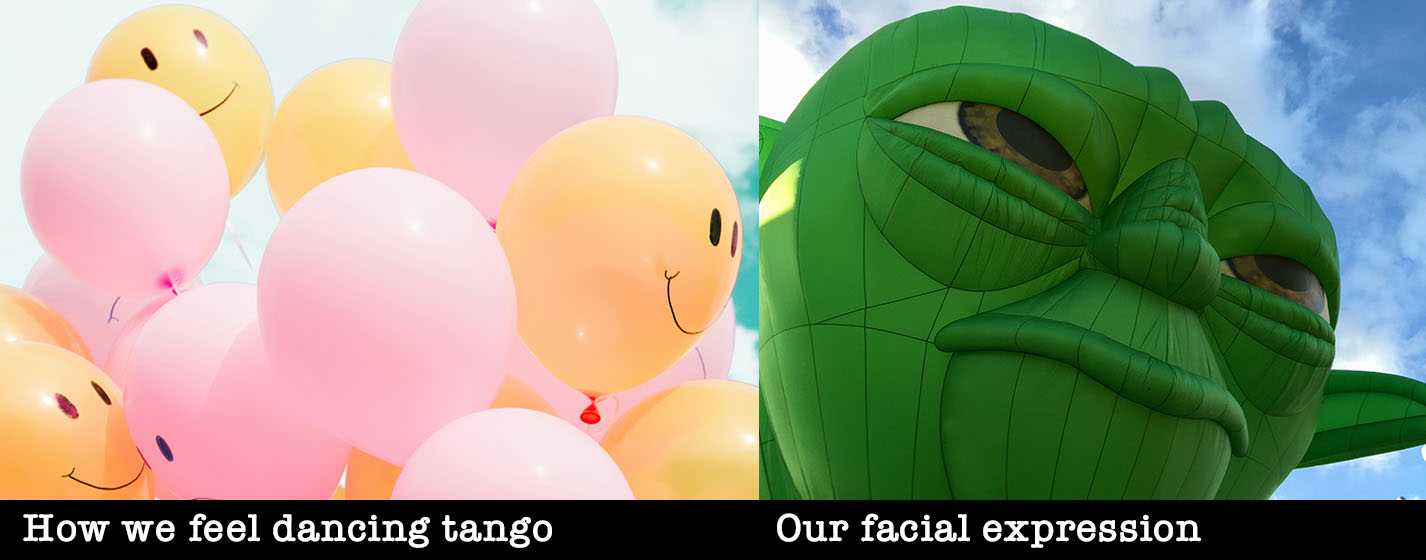
But personally, I think laughter is key. Right from my very early beginner class days, it struck me there was a strong correlation between how willing people were to laugh at their own mistakes and the amount of enjoyment they got out of tango – and, subsequently, how likely they were to continue with it. I laughed a lot.
For me, tango is a joyful activity, and there is definitely a lot of laughter at my favorite milongas and festivals.
Does tango pass the third place test?
I would say for me, in all of the important respects, the answer is absolutely yes – but it didn’t happen by chance.
I had to go to BsAs to find out what a tango third place looks like for me, and then I had to go looking for it when I returned to the UK. I’ve been fortunate enough to find it in a number of places, both in regular milongas and at festivals and encuentros.
What’s your view? Do share your thoughts in the comments.
 ben lovejoy